January 2008, a cold winter night in New York City
I’m sitting at the counter of Sushi Yasuda in the middle of an omakase meal. My girlfriend and I are in New York together for the first time. As part of this trip, we decided we would go to some nice restaurants. Sushi Yasuda was arguably one of the best places in New York to experience omakase.
Omakase, translated literally from Japanese means “I leave the details up to you.” With omakase, the dishes are selected by the chef rather than the guest.
Across the counter is the sushi chef, who moves swiftly and quietly, breaking the silence only to explain the next piece of sushi he’s offering us.
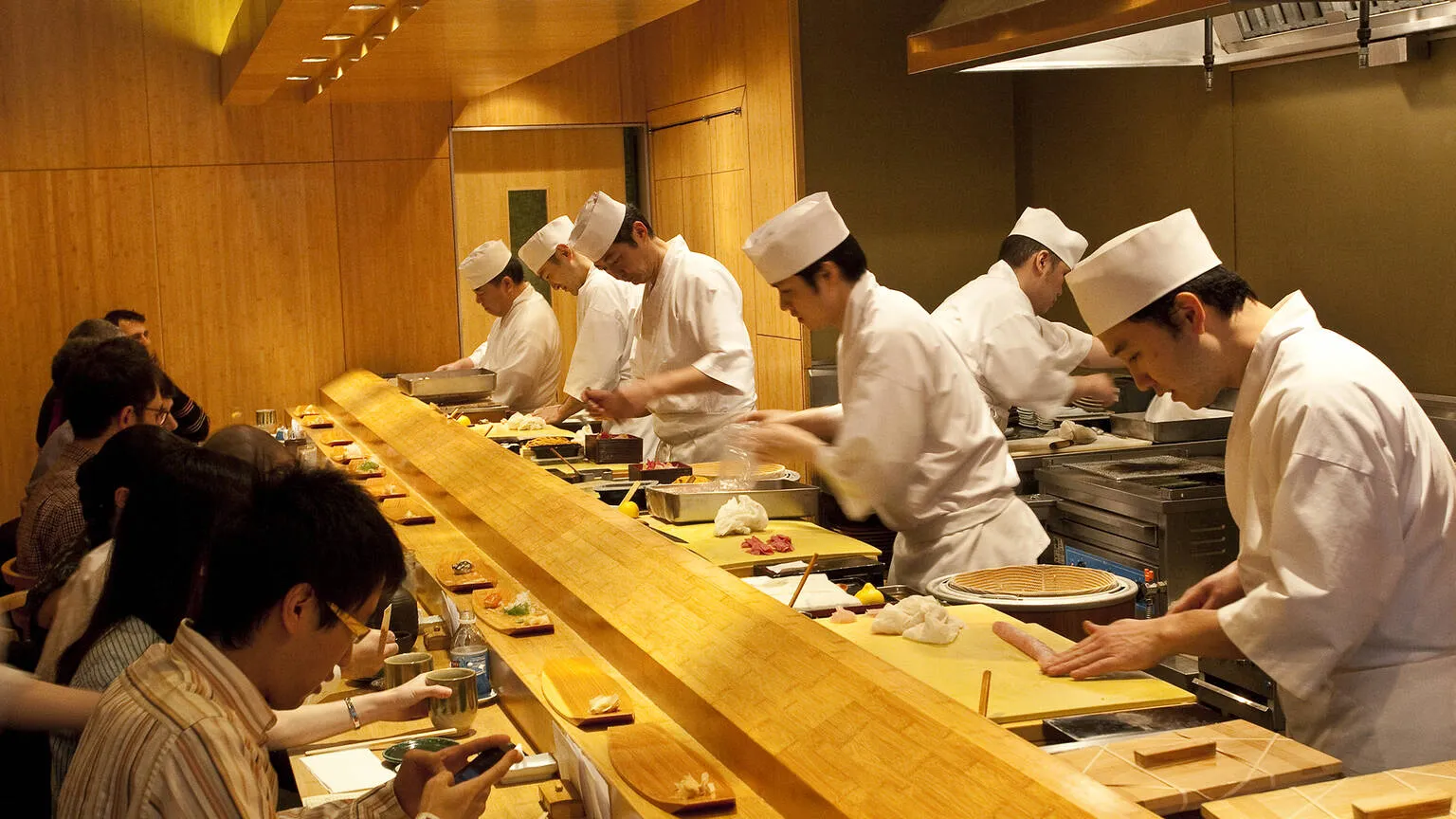 The counter at Sushi Yasuda. Photo by Caroline Voagen Nelson.
This is my first omakase experience and I’m nervous.
What if he makes something I don’t like?
How many courses do I get? How will the meal end?
What if I’m eating this wrong?
Fish after fish, this chef continues to impress, taking us in different directions, playing with textures and flavors. He explains how to eat the sushi, sometimes with our hands, other times with chopsticks, always dipping the fish side into the soy sauce.
And while I am spending nearly a quarter of my monthly graduate student salary on this one meal, I’m enjoying every minute of it.
But, years later, what stood out to me wasn’t just the fish. It was how the entire experience unraveled in real time.
Revealing along the way
When designing an experience, should you share all the details at the beginning or reveal along the way?
I often think about this when designing a course, event, or even a night with my family.
There’s something exciting about the suspense and uncertainty of not knowing it all in the beginning.
The person who is a part of your experience has a heightened sense of awareness because they can’t completely predict what is going to happen next. They feel a sense of anticipation.
One segment builds up on the next, as if they’re watching a theater play with multiple acts or a DJ playing a live set.
Revealing along the way helps people focus on what’s in front of them instead of being distracted by what’s ahead. It helps you, the facilitator, control the tempo and direction of an experience, adjusting based on how people react. As one critic wrote about Sushi Yasuda:
The chefs understand that each person sitting at the counter has different tastes, degrees of “sushi experience,” energy levels and moods. They prepare each meal accordingly, even considering the size and shape of a person’s mouth. They gently query someone who has never sat with them before to gauge their probable preferences; the chefs will design a meal that stimulates interest, awareness and pleasure.
Revealing the details along the way takes care and practice. It involves finding the right setting for the right audience, who is open and willing to take on this unexpected format. They need to trust the person curating and designing the experience for them.
When done well, revealing along the way can be truly exceptional. Years later, I can still feel what it was like to sit across the counter from the chef. The sushi glimmering like a jewel on my plate. The sushi chef’s kind and measured tone explaining how to eat what he had prepared. The feeling of sinking my teeth into something I didn’t fully understand, but immediately appreciated.
What mattered that night at Sushi Yasuda wasn’t just the dishes served, but also how the details emerged over the course of the evening, culminating into an unforgettable meal.